Dental Implants in West Chester, PA Replace missing teeth, predictably.

From a single tooth to a full arch, East Bradford Dental restores dental implants for West Chester and Chester County patients. We handle the crown and restoration side; the surgical placement is done by oral surgeons we partner with and trust. You have one point of contact — us — for the whole process.

Book a Free Consultation
iTero digital scanning at East Bradford Dental
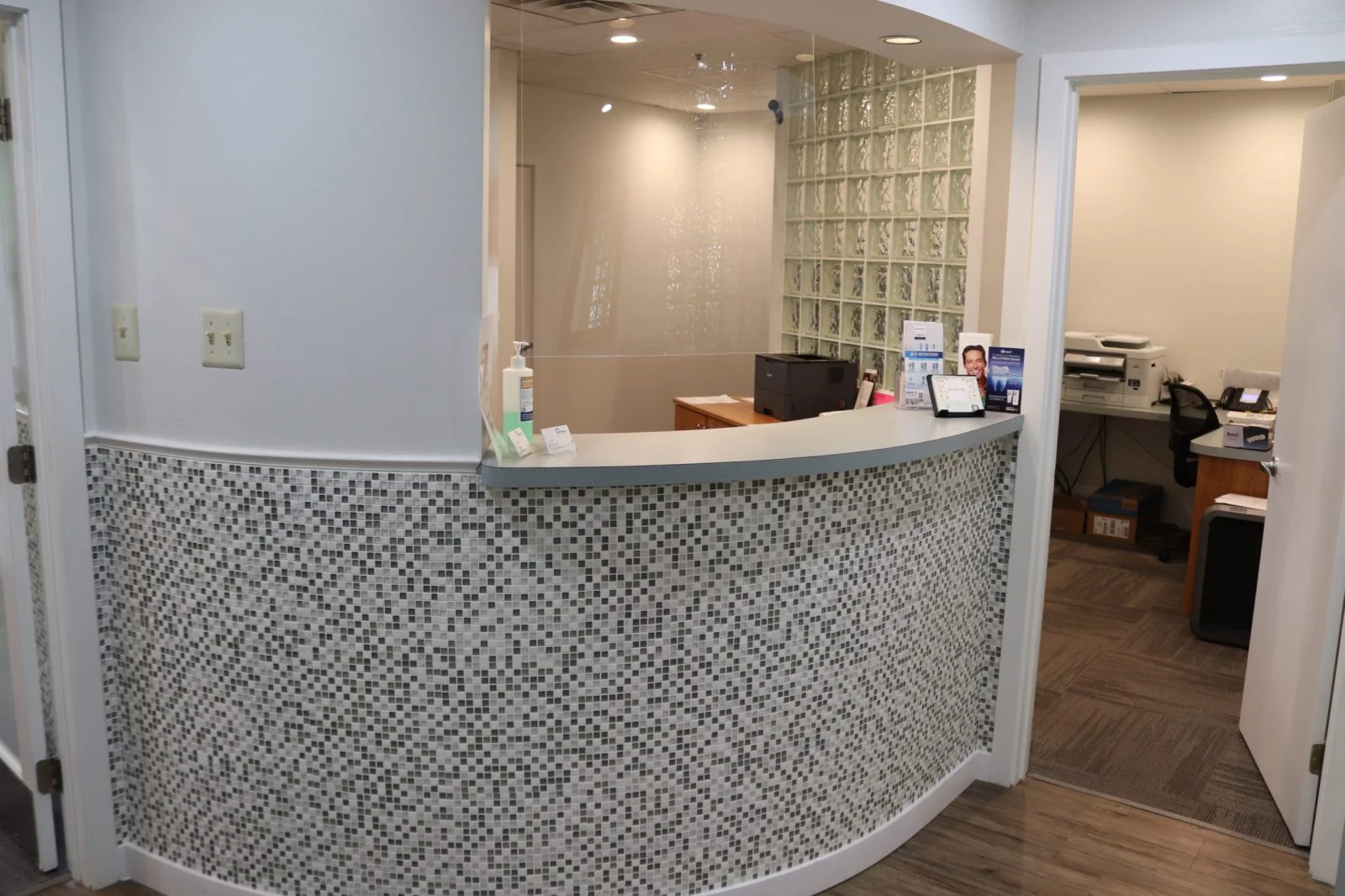
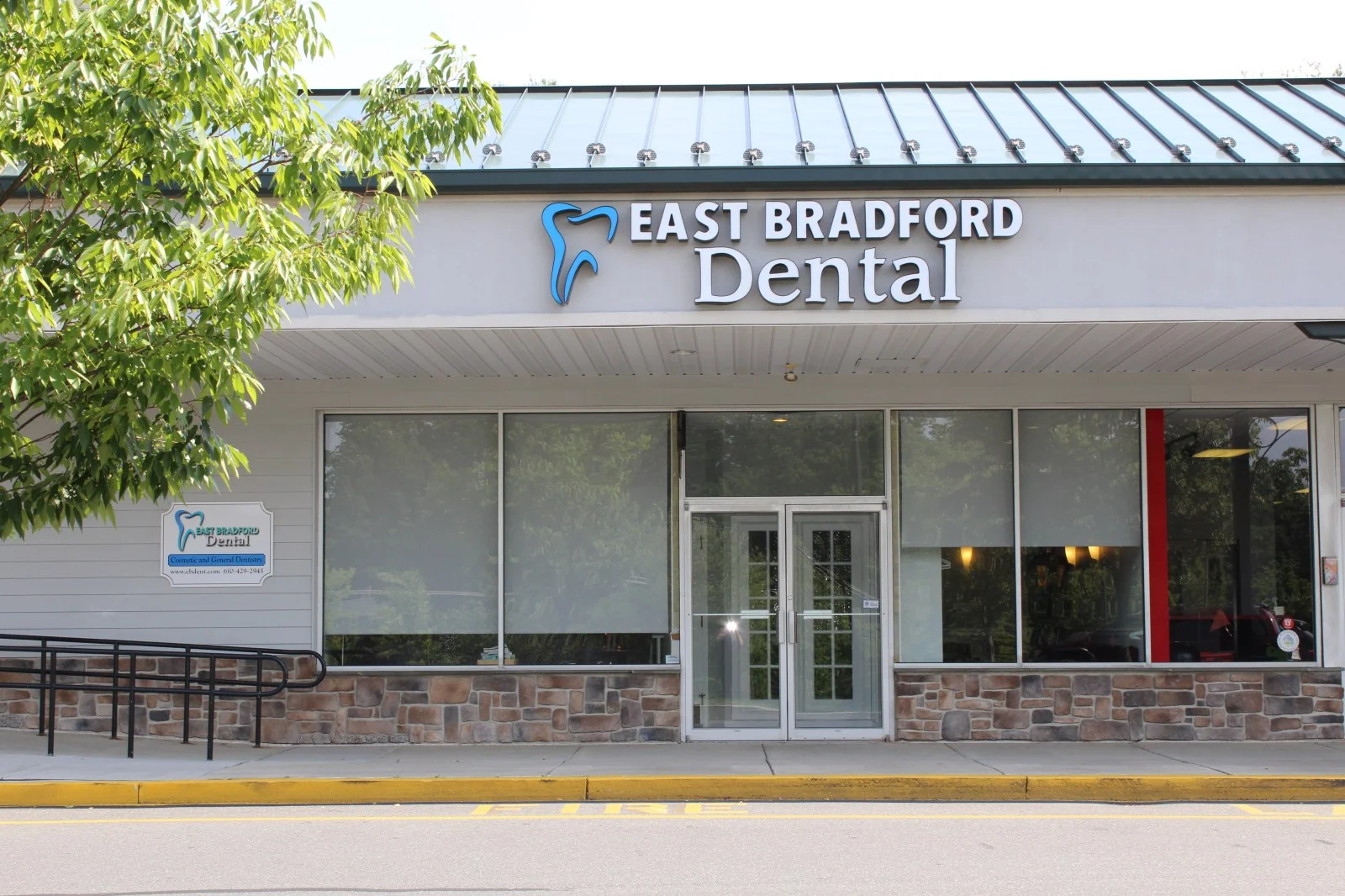
East Bradford Dental practice in West Chester, PA
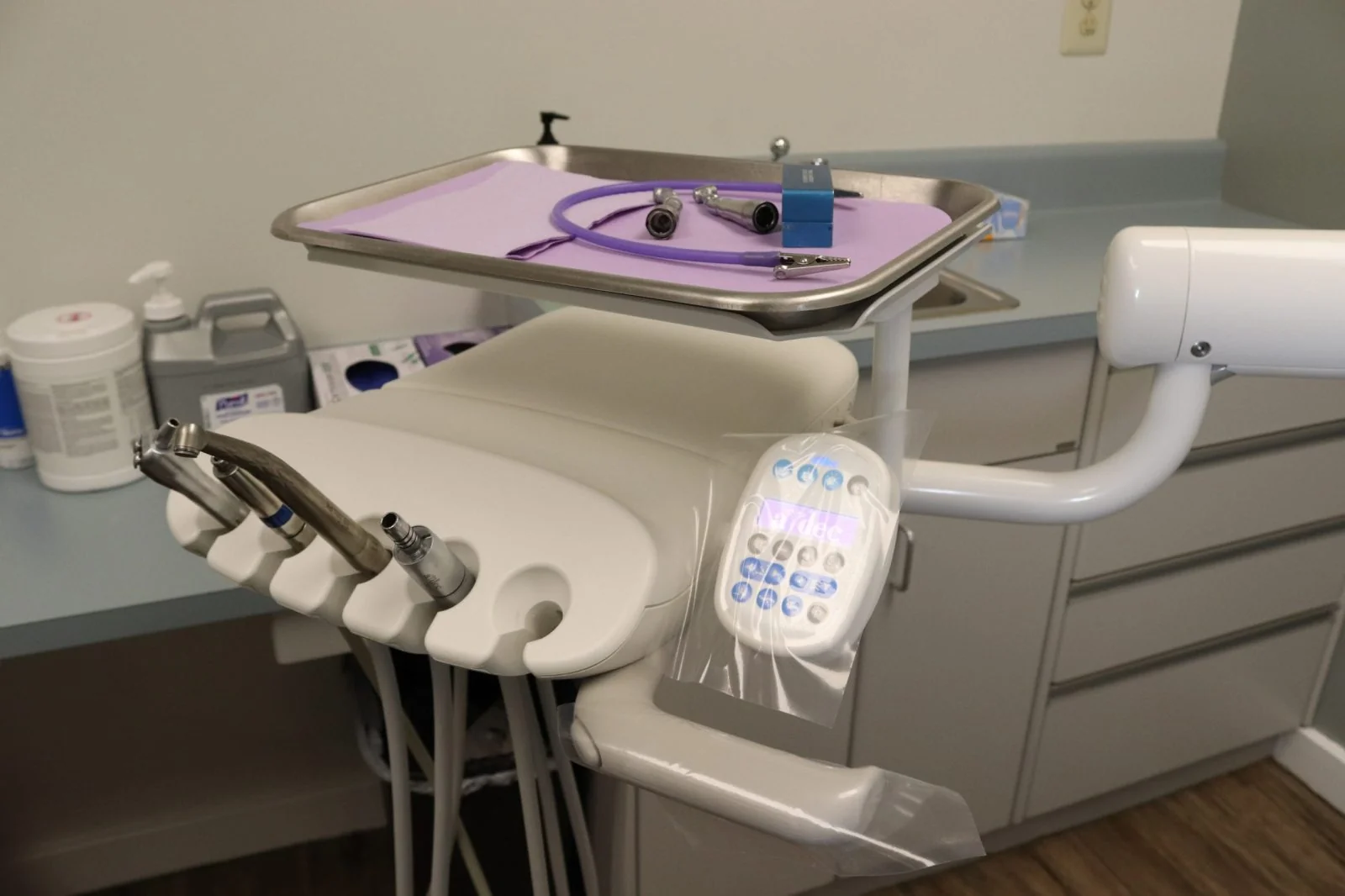
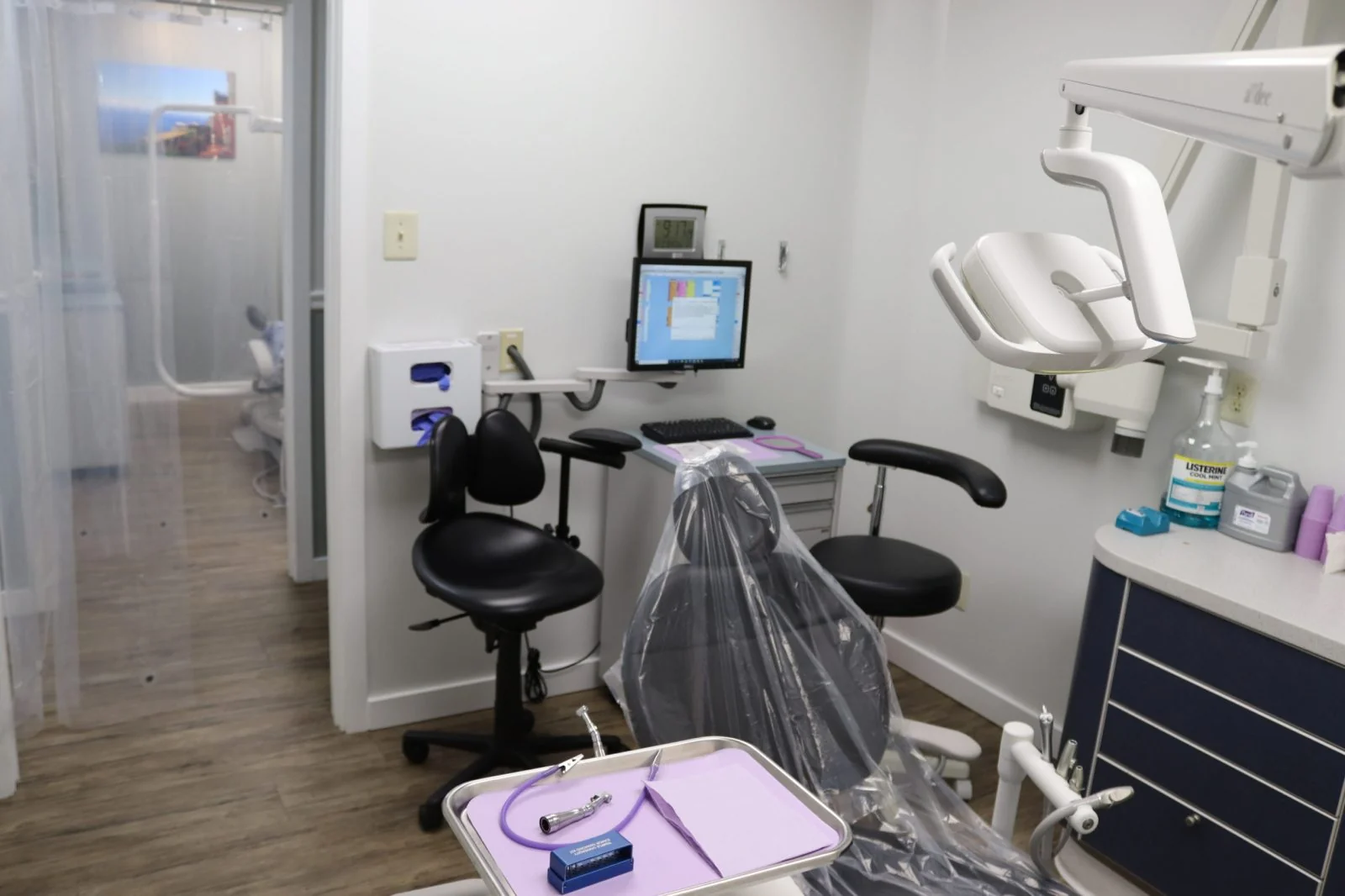
Treatment suite interior
Why Implants

The most flexible, functional way to replace a tooth.

When you lose a tooth, you have three main options: do nothing, bridge it, or implant it. We almost always recommend an implant. Here's why.

When a tooth is missing and isn't replaced, neighboring teeth drift into the gap and the opposing tooth begins to over-erupt. Your bite changes. Wear patterns shift. Other restorations start to break down faster because the load is no longer distributed evenly. Replacing the tooth keeps everything else stable.

Bridges are excellent restorations, but they require us to reduce (grind down) two healthy neighboring teeth to anchor the bridge. They also can't be flossed between the teeth like normal — which makes long-term hygiene harder and puts two other teeth at risk for decay or root issues down the road. A partial denture is even less ideal: it's removable, less aesthetic, and most patients don't love wearing them.

An implant doesn't touch the neighboring teeth. It can be flossed and brushed like a natural tooth. It prevents the bone loss that follows extraction. And it functions like a normal tooth — most patients forget which one it is. It's the gold standard for tooth replacement, and it's what we recommend in nearly every case where it's an option.

  • Doesn't involve neighboring teeth
    Unlike a bridge, an implant stands on its own — no need to grind down healthy teeth to anchor it.
  • Prevents bone loss
    The jawbone needs stimulation from a tooth root to stay healthy. An implant provides that; a bridge doesn't.
  • Flosses like a normal tooth
    Bridges can't be flossed in the conventional way — implants can.
  • Can last a lifetime
    With good hygiene and regular dental visits, a well-placed implant routinely lasts 25+ years. Many last for life.
  • 95%+ long-term success rate
    Implants are one of the most predictable procedures in modern dentistry. Failures are rare and usually manageable when they happen.
  • Looks and feels like a natural tooth
    Most patients forget which tooth is the implant. It just functions like the rest of your teeth.
What We Restore

From one tooth to the full arch.

We restore implants at any scale. Single tooth, multiple teeth, full-arch — including the anterior (front) zone, which demands extra cosmetic precision. Pricing ranges below are typical for the West Chester market and include both the surgical placement and our restoration portion. You'll get an exact written quote at your consultation.

01

Single-tooth implant

The most common case. One missing or compromised tooth is replaced with an implant fixture + abutment + crown. Most patients are eating normally with the final crown 3-6 months after the implant is placed.
Typical all-in range $4,000 - $5,000
Restoration portion only: $1,000 - $2,000
02

Implant-supported bridge

Two implants supporting a bridge of three or more teeth. A more efficient solution than placing an individual implant for each missing tooth — common when several adjacent teeth are missing.

Typical range $8,000 - $9,000
Per 3-unit bridge supported by 2 implants
03

Full-arch (All-on-X)

A complete arch of teeth supported by 4-6 implants — sometimes called "teeth in a day" or All-on-4 / All-on-6. We do these in-house, coordinating closely with the surgeon. Complex cases, handled carefully.

Typical range $30,000 - $35,000
Per arch (upper or lower)
04

Anterior (front tooth)

Cosmetic-zone implants demand a higher level of precision in shade matching, contouring, and emergence profile. During healing, we make you a clear retainer like an Invisalign tray with a tooth built in where the implant is healing, so you're never walking around with a gap.

Typical all-in range $4,500 - $5,500
Slightly higher than posterior due to cosmetic demands
05

Implant-supported denture

Dentures that snap onto 2-4 implants rather than resting on the gums. Dramatically more stable and comfortable than traditional dentures — patients can eat steak again — without the cost of full-arch restoration.

Typical range $12,000 - $20,000
Depends on number of implants (typically 2-4 per arch)
06

Restoration of existing implants

Had an implant placed elsewhere and need the crown made? Or need an existing crown replaced or repaired? In most cases we can take over the restoration side. Bring records from the placing surgeon (we can help retrieve them).

Typical range $1,500 - $2,500
Crown only — assumes implant is already integrated
How It Works

What to expect, step by step.

Two offices are involved in your implant — ours and the surgeon's — but you have one point of contact. We coordinate everything. Here's the typical journey for a single-tooth implant.

  1. 1

    Consultation & planning

    You come in for a free consult. We take a full set of diagnostic records, including a cone beam CT scan (CBCT) and iTero digital scans. We review the site, evaluate bone quantity and quality, and put together a treatment plan with timeline and exact pricing. This visit alone usually answers most of your questions.

  2. 2

    Extraction & site prep (if needed)

    If the tooth is still in the mouth and needs to come out, we coordinate the extraction with the surgeon — often combined with the implant placement in the same visit. If bone loss has already occurred, a bone graft may be done now to prepare the site for the implant in a few months.

  3. 3

    Implant placement (surgeon's office)

    The oral surgeon places the titanium implant fixture into the jawbone. This appointment is typically under an hour, done with local anesthesia (sedation available if you prefer). Most patients are back to normal activities the next day and report less discomfort than they expected. For front-tooth cases, we make you a clear retainer like an Invisalign tray with a tooth built in where the implant is healing, so you're never without a visible tooth.

  4. 4

    Integration & healing

    The implant fuses (osseointegrates) with the bone over 3-6 months. During this period there's nothing you need to do beyond your normal oral hygiene. You'll come in for one or two short check-ins so we can make sure healing is on track.

  5. 5

    Crown design & delivery

    Once the implant is integrated, we take a digital scan with our iTero scanner — no goopy impressions — and design a crown that matches your existing teeth in shape, shade, and contour. Two visits with us: one for the scan, one to deliver and adjust the final crown. Most patients tell us they forget which tooth it is within a few weeks.

A Real Case

From failed root canal to eating steak again.

One of our patients had a molar that had been root canaled years earlier. The root canal failed and the tooth became infected. We coordinated with the oral surgeon for extraction and implant placement in the same visit. Four months later — once the implant had fully integrated — they came back for the crown. We took a digital scan, designed the crown, and delivered it two visits later.

That patient is back to eating whatever they want — steak, apples, corn on the cob — without thinking about it. That's the goal of every implant case: you stop being aware of the tooth. It just works.

A Common Question

Should I go to ClearChoice instead?

Patients ask us this regularly. The honest answer: we can do anything they do, often for less, with the doctor who actually knows you.

ClearChoice is a national chain that markets heavily to patients considering full-arch implants. They're capable at what they do, but the model is different — high volume, premium pricing, and you'll see whichever doctor is on shift that day. There's nothing wrong with that, but it's worth knowing.

Most patients considering implants don't actually need a full-arch case. They need one, two, or a handful of teeth replaced. For those cases, a full-arch implant center is overkill. And even for full-arch cases, we can handle them in-house, coordinating with our surgical partners, at a more personal scale.

Come in for a free consult. We'll give you an honest evaluation — including telling you if we'd refer you elsewhere for a specific case. That happens occasionally and we don't pretend otherwise.

Treatment suite at East Bradford Dental
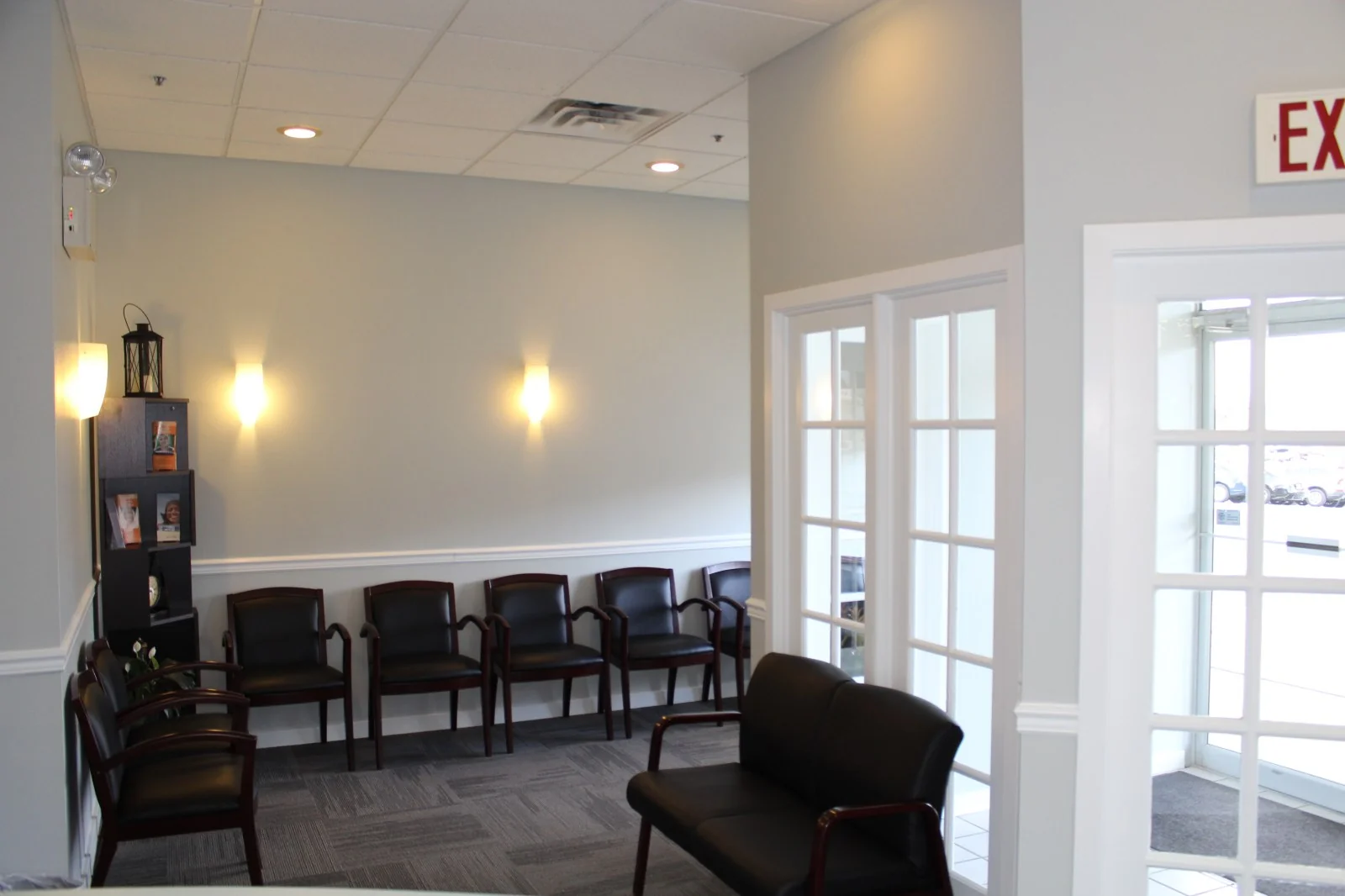
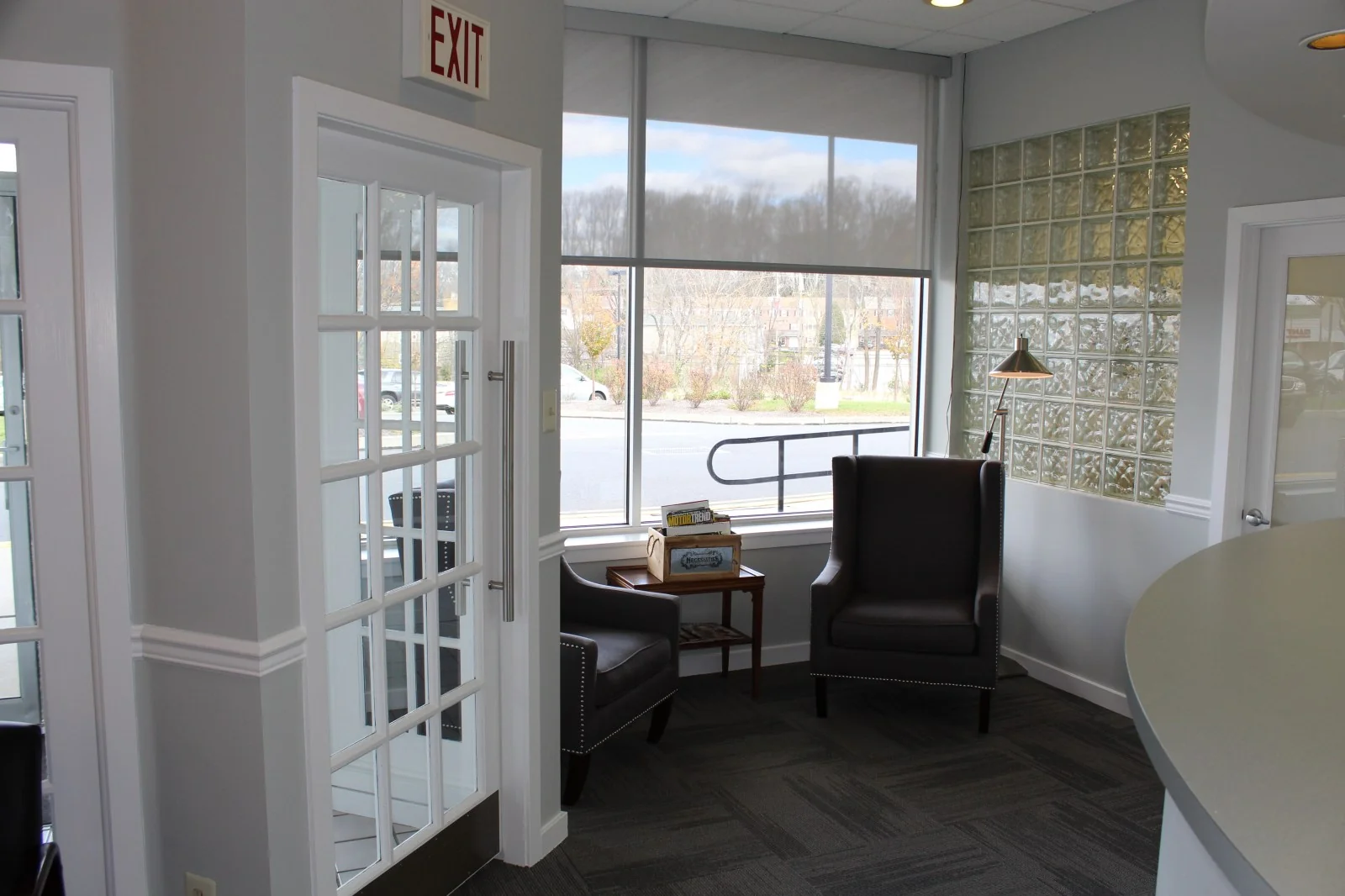
Practice interior
Treatment room
Insurance & Financing

What you'll actually pay.

We submit claims to your insurance on your behalf and apply your benefits wherever they apply. Most PPO plans cover a portion of the crown, but not the surgical placement. Here's how the financial side typically works.

  • Most PPOs partially cover the crown
    Coverage typically applies to the crown portion as a "major restorative" benefit, subject to your annual maximum. The surgical placement is usually not covered.
  • In-network with major PPOs
    United Concordia, Guardian, Aetna, and many others. We'll verify your specific benefits before treatment so there are no surprises.
  • CareCredit financing available
    For larger cases, CareCredit offers 6, 12, 18, and 24-month interest-free payment plans (subject to credit approval). Most implant patients use this for the portion not covered by insurance.
  • Benefit plan members get a discount
    If you're enrolled in our in-house benefit plan (for patients without dental insurance), you'll receive a discount on implant work. See plan details.
  • Free initial consultation
    No charge to come in and find out whether implants are right for you. You'll leave with a written treatment plan and an exact price — no obligation.
Common Questions

Implant questions.

  • How much does a single tooth implant cost?
    For a West Chester patient, $4,000 to $5,000 all-in is typical. That includes the surgical placement (done by the oral surgeon we partner with) and our restoration portion — the abutment and crown. Anterior (front tooth) cases run slightly higher due to cosmetic demands: $4,500-$5,500. You'll get an exact written quote at your consultation.
  • Why do you recommend implants over a bridge?
    Bridges are excellent restorations, but they require us to grind down two healthy neighboring teeth as anchors, and they can't be flossed between the teeth normally. That makes long-term hygiene harder and puts those two other teeth at risk down the road. Implants stand alone, can be flossed like a natural tooth, and prevent the bone loss that follows extraction. They give you the most flexibility and function long-term.
  • Do you place the implant or just the crown?
    We handle the restoration — the abutment and crown that sits on top of the implant. The surgical placement of the implant fixture itself is done by an oral surgeon we partner with and refer to regularly. We coordinate the whole process so you have one point of contact, even though two offices are involved.
  • How long does the whole process take?
    For a single implant without bone grafting: typically 3 to 6 months from extraction or implant placement to final crown. Most of that is healing time. Your appointments with us are usually just two short visits at the end — one for the digital scan, one to deliver the final crown. More complex cases involving multiple implants, grafting, or full-mouth work can take 6 to 12 months.
  • Will my insurance cover it?
    Most PPO plans don't fully cover implants, but many cover a portion of the crown as a "major restorative" benefit, subject to your annual maximum. The surgical placement is usually not covered. We're in-network with most major PPOs and submit claims on your behalf. For the portion not covered, CareCredit financing or our in-house benefit plan discount can help.
  • Does it hurt?
    The surgical placement is done with local anesthesia (sedation is available if you prefer). Most patients report less discomfort than they expected and are back to normal activities the next day. Mild soreness for a few days is normal; severe pain is not, and we want to know if it happens.
  • What if I'm told I don't have enough bone?
    Bone loss is common after a tooth has been missing for a while — but it doesn't usually rule out implants. A bone graft can rebuild the site, and after a few months of healing, the implant can be placed normally. We'll evaluate with cone beam CT imaging and tell you exactly what your case requires.
  • Can you replace a front tooth with an implant?
    Yes — we restore anterior (front tooth) implants regularly. During the healing period, we make you a clear retainer like an Invisalign tray with a tooth built in where the implant is healing, so you're never walking around with a gap. Front-tooth cases demand a higher level of cosmetic precision, which is one of the reasons we coordinate carefully with the surgeon on placement angle and timing.
  • Can you restore an implant placed somewhere else?
    Usually, yes. Bring in records from the placing surgeon (we can help retrieve them if needed). Most implant systems are restorable with the right components, even if it was placed at a different practice years ago.
  • What if a crown comes loose years later?
    Call us at 610-429-2945. Most loose implant crowns are easy to address — the small screw retaining the crown to the implant can loosen over time and we tighten it back down. If a cemented crown debonds, we re-cement. Failures of the implant fixture itself are rare but can happen; if that's the case, we coordinate with the surgeon to evaluate.
Why East Bradford

Three decades of care in West Chester.

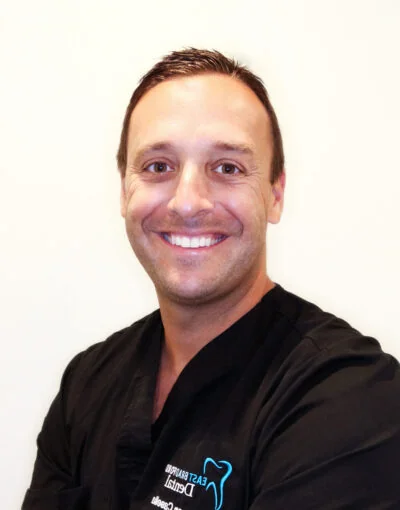
East Bradford Dental has been caring for West Chester and Chester County families since 1993 — over 30 years of continuous practice in the same community. Dr. Steven Casella took the helm in 2015 and has invested heavily in modern technology and treatment protocols, including the iTero digital scanning and cone beam imaging we use for implant planning.

We were named to Philadelphia Magazine's Top Dentists 2026 list — peer-nominated recognition from other dentists in the region. For implant cases specifically, that means the doctor restoring your case has the relationships, the technology, and the local reputation that come from doing this work at the same address for a long time.

Meet the doctors
Dr. Steven Casella, D.M.D.
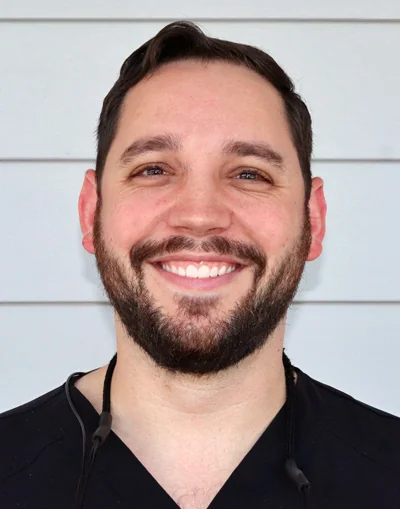
Dr. Patrick Rupert, D.M.D.
iTero digital scanning
Ready to Get Started?

Let's talk about your case.

Free consultation, no pressure, written treatment plan with exact pricing. Whether you need one tooth replaced or the full mouth restored, we'll give you an honest evaluation and a realistic timeline.